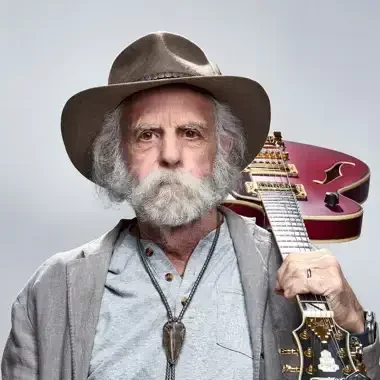
In the living history of American music, Bob Weir represents something far greater than a guitarist or a founding member. He is the enduring keeper of a fundamental and resilient principle: the idea that music is a living organism, an infinite conversation, and a collective journey, not a destination. As the last surviving core member of the Grateful Dead, he is the final, direct bridge to the source of one of rock's most mythologized and communal adventures.
Weir was never a traditional lead guitarist. His genius lay in "the art of space." While Jerry Garcia wove lyrical, aerial melodies, Bob constructed the harmonic architecture. His playing—syncopated, jazzy, and rhythmically complex—provided the skeletal framework and the dynamic push for the band's improvisational explorations. He was the rhythmic engine that never repeated a pattern the same way, constantly nudging the group into the unknown during defining jams like "Dark Star" or "The Other One."
With the passing of Jerry Garcia in 1995, the Grateful Dead as a creative entity ended. But Bob Weir became the steward of the flame. Through subsequent projects like RatDog, Furthur, and the massively successful Dead & Company, he has tirelessly perpetuated and evolved the Dead's musical "source code." He ensured the songbook did not become a museum piece, but a living, breathing language spoken to new generations.
Today, at 78 years old , Weir's energy remains formidable with Wolf Bros and other ventures. His legacy is now actively carried forward by the vast community of Deadheads, his numerous collaborators, and the generations of musicians he inspired. The "long, strange trip" continues unabated.
Bob Weir holds the secret to that unique pulse, that improbable "feel" that made the Grateful Dead more than a band: a sonic ecosystem in perpetual motion. While the original heartbeat is his to remember, he has successfully passed on the conversation. The music lives eternally in recordings, in the hearts of fans, and in the next chord played by someone, somewhere, thanks to the boundless musical architecture he helped to build.